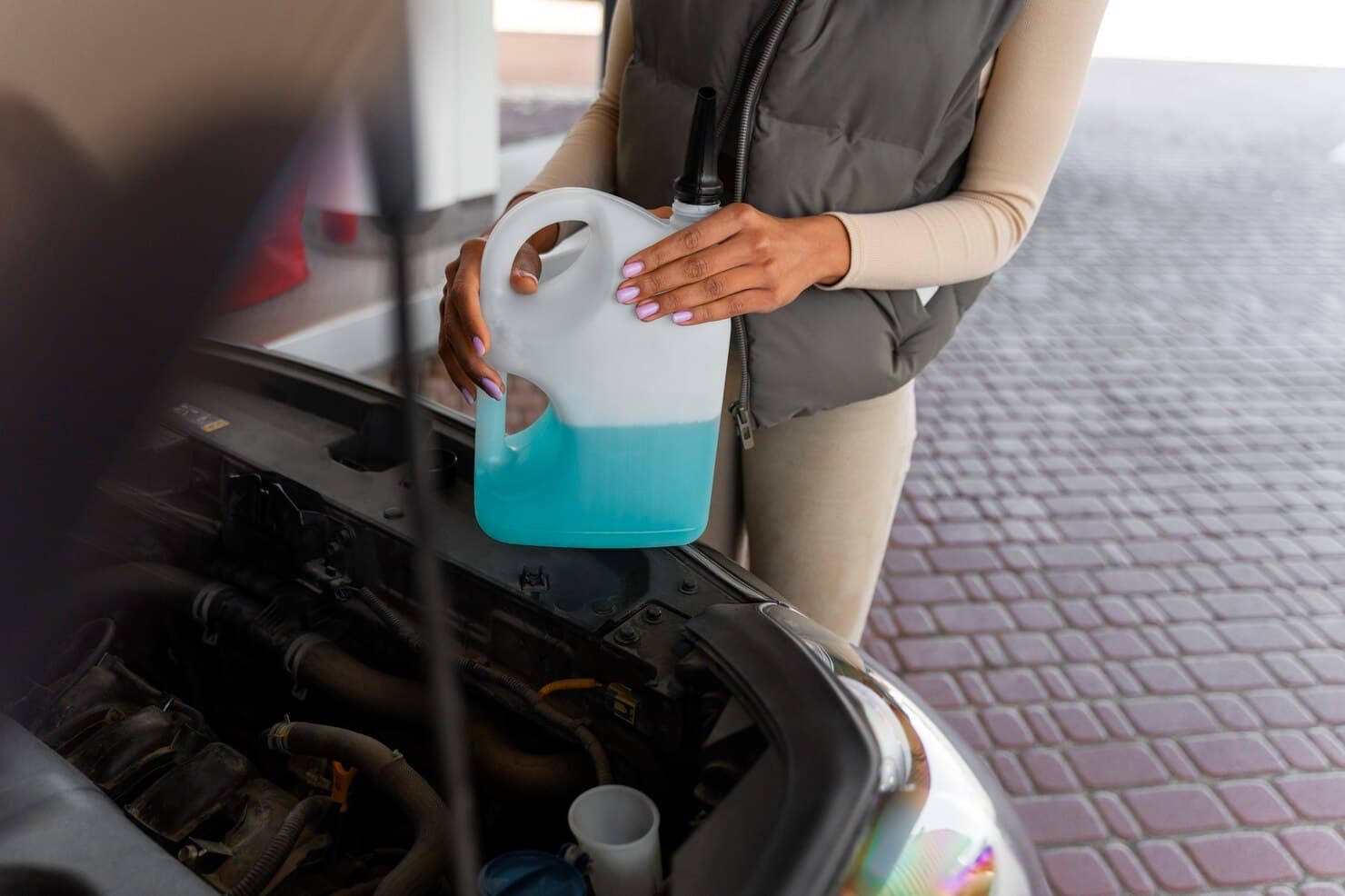
Walk down the automotive aisle of any store, and you’ll be met with a wall of colorful jugs labeled “coolant” or “antifreeze.” For many vehicle owners, these terms are used interchangeably. You might hear a mechanic say, “You’re low on coolant,” and then go to the store to buy a jug of “antifreeze.” This common confusion, while understandable, obscures a critical technical distinction that every car owner should grasp. The health of your engine’s cooling system—one of the most vital systems in your vehicle—depends on it.
The primary job of this system is to manage the immense heat generated by your internal combustion engine. Without it, the engine would quickly overheat, leading to catastrophic damage like warped cylinder heads or a cracked engine block. The liquid that circulates through this system is the lifeblood of that process. But is that liquid coolant or antifreeze? The simple answer is both, but they aren’t the same thing. Let’s demystify this topic once and for all, moving beyond simple definitions to give you the expert knowledge needed to make the right choice for your vehicle.
The Core Distinction: Concentrate vs. Mixture
The easiest way to understand the difference is to think of antifreeze as the concentrated ingredient and coolant as the final product that goes into your car.
Antifreeze is the undiluted substance, typically based on either ethylene glycol or the less-toxic propylene glycol. In its pure form, its primary job is to lower the freezing point of water, hence the name “anti-freeze.” However, it also significantly raises the boiling point of water. This dual-action property is essential. It prevents the liquid in your cooling system from turning into a solid block of ice in freezing temperatures (which would crack your engine block) and from boiling over in high-heat conditions (which would cause your engine to overheat). Antifreeze also contains a crucial package of chemical additives, such as corrosion inhibitors, anti-foaming agents, and lubricants for the water pump.
Coolant, on the other hand, is the mixture of antifreeze and water that actually circulates through your engine. For optimal performance, you almost never use 100% pure antifreeze. The most effective and common mixture is a 50/50 blend of antifreeze and deionized or distilled water. This ratio provides the best balance of freeze protection and heat-transfer capability. Water is an excellent medium for absorbing and transferring heat, but its freezing and boiling points are too narrow for an engine. By mixing it with antifreeze, you get the best of both worlds: the superior heat capacity of water combined with the extreme temperature protection of glycol. So, when you buy a “pre-mixed” or “ready-to-use” jug, you are buying coolant. When you buy a “concentrate,” you are buying antifreeze that you must mix by yourself.
Coolant Technologies: Why Color Is Not a Reliable Guide
Years ago, things were simple. The antifreeze was green. Today, the landscape is far more complex, with a rainbow of colors on the shelf. This is because engine materials have evolved, and so has coolant chemistry. Using the wrong type can cause serious damage. The color is no longer a guaranteed indicator of the type, so you must read the label. The main technologies are:
- Inorganic Additive Technology (IAT): This is the traditional green antifreeze. It uses silicates and phosphates as corrosion inhibitors. While effective, these inhibitors deplete relatively quickly, requiring the coolant to be changed every 2-3 years or about 30,000 miles.
- Organic Acid Technology (OAT): This is a modern, extended-life formula, often seen in orange, red, or dark blue. It uses organic acids to protect engine components. It lasts much longer—typically up to 5 years or 150,000 miles—and is designed for newer engines with more aluminum components.
- Hybrid Organic Acid Technology (HOAT): As the name suggests, this is a hybrid of IAT and OAT. It uses both silicates and organic acids to provide excellent, long-lasting protection. Colors can vary widely, including yellow, pink, and turquoise.
The most critical rule is to never mix different coolant types. Mixing an OAT with an IAT, for example, can cause the chemical inhibitors to react negatively, creating a thick, gelatinous sludge. This gel can clog the narrow passages in your radiator, heater core, and engine, leading to overheating and costly repairs.
Which One Do You Need? Pre-Mixed vs. Concentrate
So, how do you choose? First and foremost, consult your vehicle’s owner’s manual. It is the ultimate authority and will specify the exact type of coolant technology (e.g., OAT, HOAT) required for your engine. The manual will often list a specific standard it must meet, such as Chrysler’s MS-9769 or Ford’s WSS-M97B44-D.
Once you know the type, you have to decide between pre-mixed coolant or antifreeze concentrate. Pre-mixed 50/50 coolant is convenient and foolproof. You simply open the jug and pour. It eliminates any chance of mixing the ratio incorrectly. Concentrate, however, can be more economical. A single gallon of concentrate makes two gallons of coolant. If you choose this route, you must mix it with distilled water, not tap water. Tap water contains minerals like calcium and magnesium that can cause scale buildup inside your cooling system, leading to clogs and corrosion. Buying a gallon of distilled water is a small price to pay to protect your engine. Ultimately, understanding these details ensures you’re not just buying a product, but actively maintaining the long-term health and performance of your vehicle.